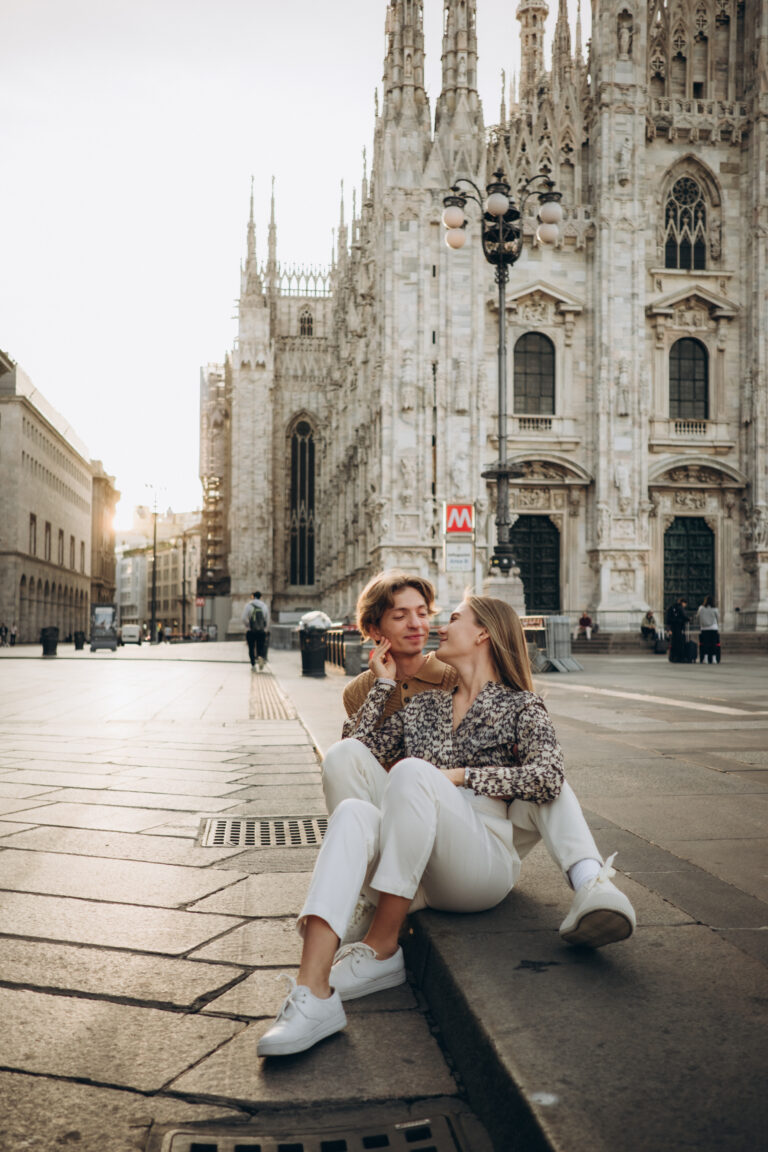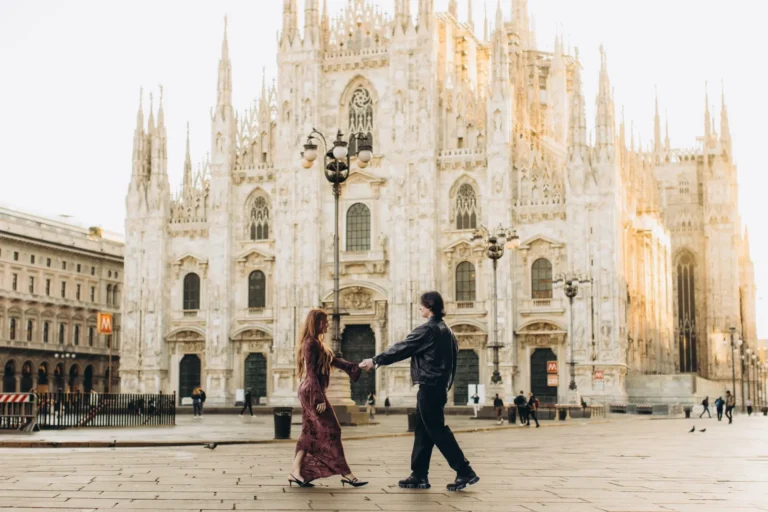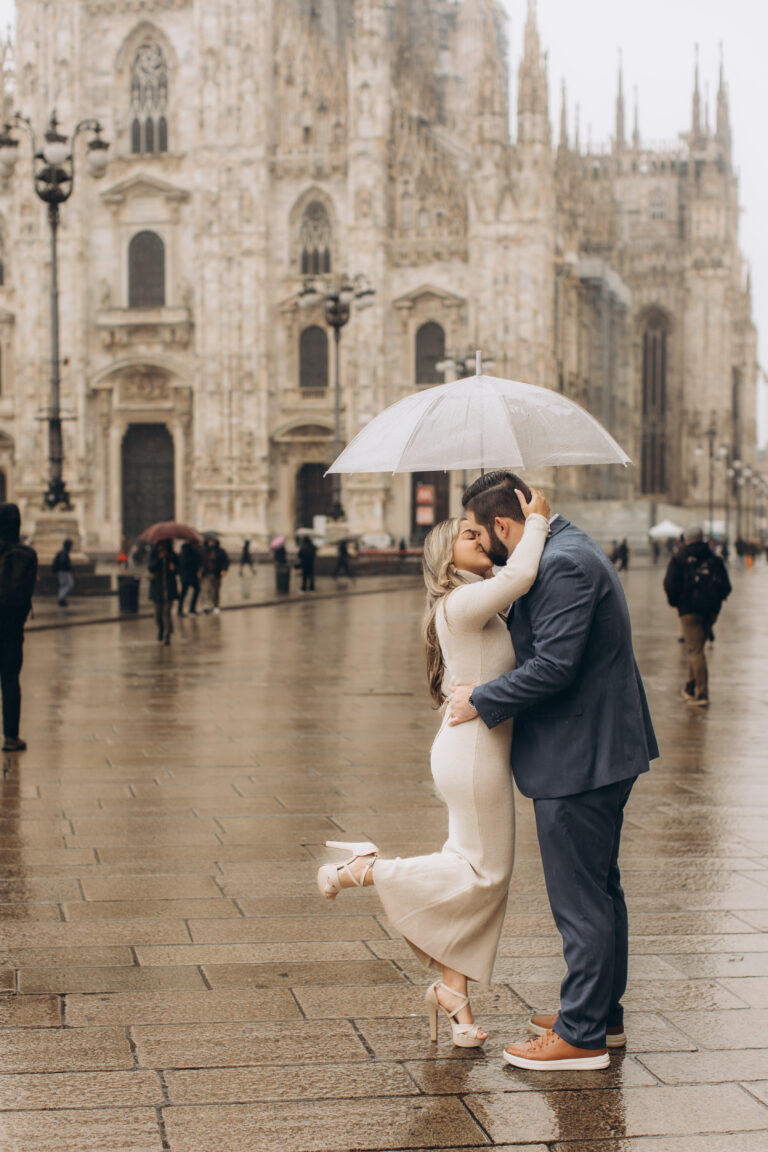

Shooting Location Milan: 9 Famous Movie Scenes You Can Visit and Photograph
Milan rarely performs for the camera in the same way as Rome or Venice. It does not immediately offer ruins, canals or postcard romance. Instead, it reveals itself through polished stone, monumental stations, private gardens, severe modernism and sudden Gothic beauty. That is why every memorable shooting location in Milan has more than visual appeal: it helps a director tell us who has power, who has just arrived and who is trying to escape.
Key takeaways
- Only places with a documented link to the film are included; the House of Gucci murder scene, set in Milan, was filmed in Rome.
- Most central stops are walkable: Milano Centrale and the Pirelli Tower, Villa Necchi Campiglio, the University of Milan, then Piazza del Duomo and the rooftops.
- Cimitero Monumentale is best kept as a separate stop to the north.
- Museums, rooftops and private interiors may need tickets or permission for a professional photoshoot.
This guide is for English-speaking visitors who want to find the real Milan behind famous films. It connects each legendary scene with a place you can locate on Google Maps and see today. Some are free public spaces; others are museums or ticketed attractions. Together, they form a cinematic route through the city – and a source of ideas for your own Milan photoshoot.
If you searched for “shooting location Milan” because you want to stand where a film was made, begin here. If you also want photographs that feel cinematic without becoming a costume-copy of the original scene, each stop includes a practical photography idea.
Before You Follow This Milan Movie Route
Film geography can be deceptive. A scene may be set in Milan but filmed in Rome, on Lake Como or inside a studio. This guide includes only places with a documented connection to the production described. For example, the murder of Maurizio Gucci in House of Gucci is set in Milan, but the production filmed that sequence in Rome. It is therefore not presented as a real Milan movie location here.
Opening hours and photography policies can change. Streets and squares are simple to visit, while museums, rooftops and private interiors may require tickets, reservations or specific permission for a professional session. Treat every map point below as a starting point and check the venue’s current rules before entering with professional equipment.
Shooting Location Milan 1: House of Gucci at the University of Milan
Film: House of Gucci (2021)
Director: Ridley Scott
Shooting location Milan map point: Università degli Studi di Milano, Via Festa del Perdono 7, 20122 Milano
Maurizio Gucci is still a shy law student when Patrizia Reggiani pushes their romance forward. Near the university, she gives him her telephone number with the confidence that will later carry her into – and through – the Gucci dynasty. The scene is light, flirtatious and almost ordinary. Its charm comes from knowing how far the relationship will travel from this youthful beginning.
The production filmed outside Milan’s historic state university on Via Festa del Perdono. The university occupies the Ca’ Granda, a vast Renaissance complex originally created as a hospital. Its red-brick courtyards, stone arcades and repeating columns give the location a much older and more textured character than a conventional campus.
Today, this Milan location – an easy walk from the Duomo – still feels active rather than frozen as a monument. Students cross the entrances, bicycles collect along the street and daily life keeps the architecture from looking like a museum set. The exterior on Via Festa del Perdono is the easiest point to place on your map. Access to internal courtyards depends on university operations and current rules.
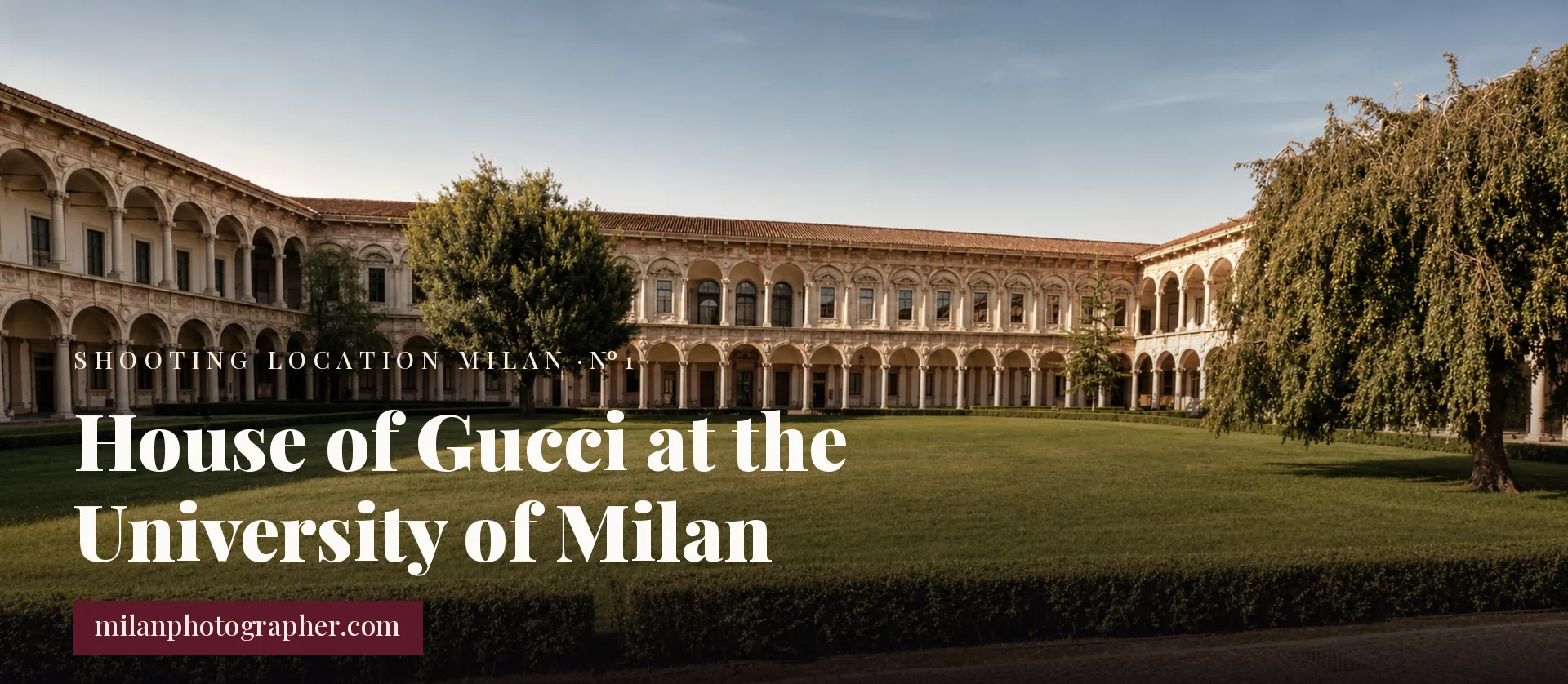
Photography idea: Use the arches and long perspective lines for a walking portrait or a playful couple sequence. Morning usually offers softer light and fewer pedestrians. The goal is not to imitate Lady Gaga and Adam Driver, but to borrow the scene’s mood: two people at the beginning of a story.
Want your own scene here? I can turn this spot into a relaxed editorial photoshoot built around movement, conversation and the feeling of meeting in the city for the first time.
Shooting Location Milan 2: House of Gucci at Rodolfo Gucci’s Milanese Home
Film: House of Gucci (2021)
Director: Ridley Scott
Shooting location Milan map point: Villa Necchi Campiglio, Via Mozart 14, 20122 Milano
The atmosphere has changed completely. Family members dressed in black gather in a house where wealth is expressed not through glitter, but through restraint: immaculate surfaces, measured gestures and guarded faces. In the film, Villa Necchi Campiglio becomes the home of Rodolfo Gucci, played by Jeremy Irons, and provides the setting for his funeral.
The villa was not a Gucci residence in real life. Architect Piero Portaluppi designed it for the Necchi Campiglio family in the 1930s. Cinema uses the property as a visual shorthand for Milanese privilege because every element – the garden, swimming pool, walnut-lined rooms and rationalist geometry – suggests a world protected from the street outside.
For anyone researching shooting location in Milan, Villa Necchi is unusually rewarding because it is now a museum managed by FAI and can normally be visited with a ticket. The address is hidden behind Via Mozart, only a short walk from Corso Venezia. Opening days, admission conditions and photography rules should be confirmed before visiting; a normal museum ticket does not automatically permit a professional portrait session inside.
Photography idea: The surrounding streets – Via Mozart, Via Serbelloni and Via Cappuccini – share the villa’s discreet, old-Milan elegance. They work beautifully for tailored clothing, quiet couple portraits and photographs framed through gates, trees and stone façades.
Want your own scene here? We can build a shooting location in Milan session around the exterior neighborhood and, where permission allows, the villa’s refined architectural atmosphere.
Shooting Location Milan 3: I Am Love Inside Villa Necchi
Film: I Am Love (Io sono l’amore, 2009)
Director: Luca Guadagnino
Shooting location Milan map point: Villa Necchi Campiglio, Via Mozart 14, 20122 Milano
Snow settles over Milan as the Recchi family gathers for the birthday of its patriarch. Servants move silently, courses arrive with ritual precision, and every place at the table appears to have been assigned long before the guests entered the room. Beneath the elegance, small changes in inheritance, loyalty and desire begin to disturb the family’s perfect order.
Luca Guadagnino does not merely use Villa Necchi as a beautiful background. Its rooms shape the emotional life of Emma Recchi, played by Tilda Swinton. The house feels luxurious, yet its corridors, doors and formal arrangements also make it feel like an exquisite enclosure. The villa becomes so central that many travelers remember the architecture as vividly as the actors.
This is the rare shooting location in Milan that belongs convincingly to two very different international films. House of Gucci uses it to project dynastic status; I Am Love makes it an intimate emotional world. Seeing the property in person reveals how directors can transform the same architecture through light, movement and performance.
Photography idea: For an I Am Love-inspired portrait, think in terms of quiet frames rather than literal reenactment: a figure partly concealed by foliage, a reflection in glass, a pause beside a closed gate. Soft winter light or the last light of the afternoon suits this restrained visual language.
Want your own scene here? I can create a Milan portrait story inspired by the villa’s geometry and atmosphere while keeping the photographs personal to you.
Shooting Location Milan 4: I Am Love at Monumental Cemetery
Film: I Am Love (Io sono l’amore, 2009)
Director: Luca Guadagnino
Shooting location Milan map point: Cimitero Monumentale, Piazzale Cimitero Monumentale, 20154 Milano
After a family tragedy, private grief enters one of Milan’s most imposing public spaces. The mourners appear beneath the vast architecture of the Famedio, the cemetery’s monumental Hall of Fame. Stone, shadow and ritual replace the warmth and controlled abundance of the Recchi dining table. The scene is brief, but it changes the emotional scale of the film.
Cimitero Monumentale is not a conventional tourist photo stop. It is an active cemetery as well as an open-air collection of Milanese sculpture and architecture. The Famedio stands immediately beyond the main entrance, making the cinematic space recognizable as soon as you arrive.
Of all the shooting locations in Milan, this one calls for particular sensitivity. Check opening hours, dress respectfully, remain quiet and never allow a portrait session to disturb mourners or ceremonies. Commercial or organized photography may require authorization. For many visitors, the right approach is to experience the architecture without staging photographs inside.
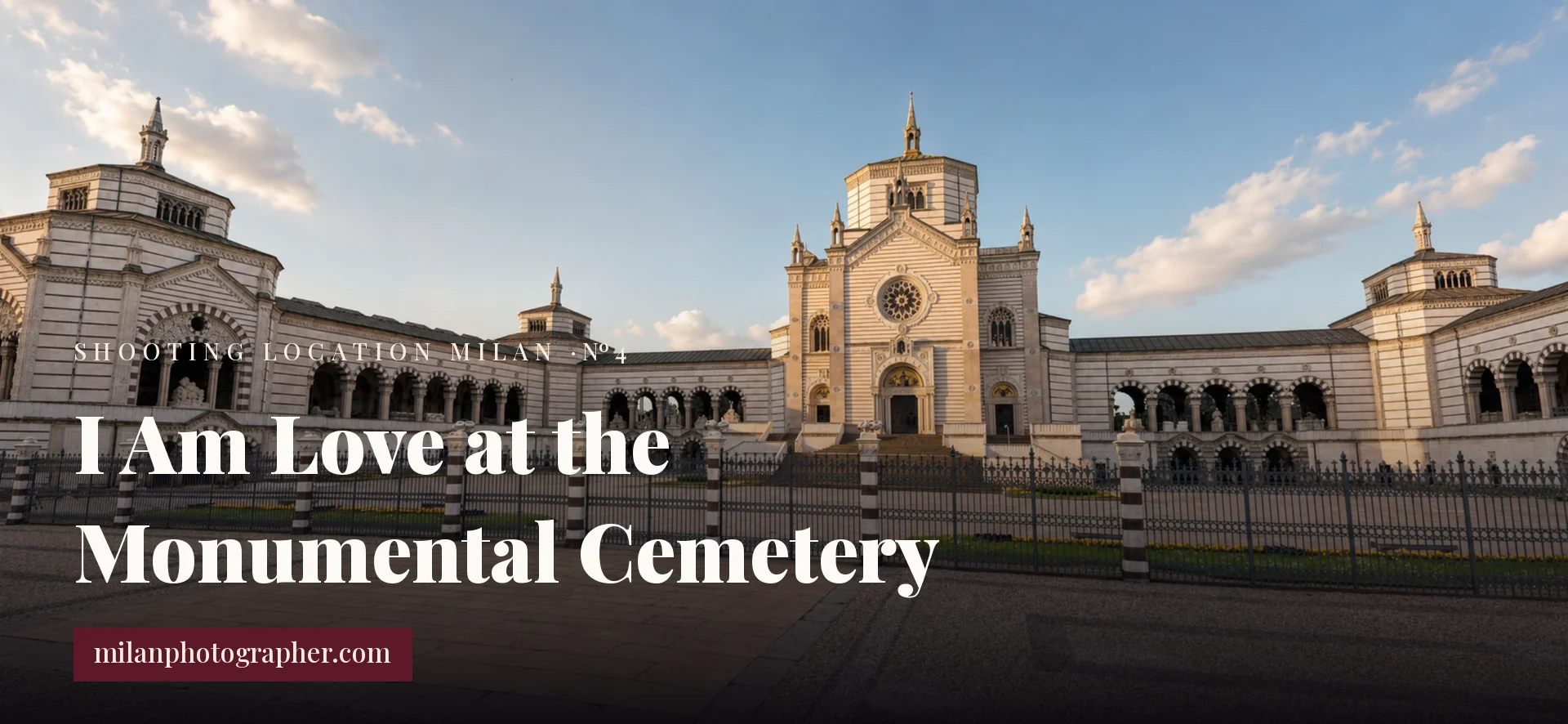
Photography idea: If a formal session inside is inappropriate or not permitted, nearby Porta Volta offers pale stone, strong lines and modern architecture that can carry a similarly contemplative mood without treating a cemetery as a fashion backdrop.
Want a thoughtful cinematic portrait? I can use this shooting location in Milan as visual inspiration and choose a respectful nearby setting where the atmosphere can be recreated without intruding on a place of remembrance.
Shooting Location Milan 5: Rocco and His Brothers at Milano Centrale
Film: Rocco and His Brothers (Rocco e i suoi fratelli, 1960)
Director: Luchino Visconti
Shooting location Milan map point: Milano Centrale, Piazza Duca d’Aosta 1, 20124 Milano
A mother and her sons arrive from southern Italy carrying suitcases, baskets and expectations. Milano Centrale receives them not with warmth, but with scale. The station seems immense; the family appears small inside it. In a few images, Visconti establishes the promise and intimidation of postwar Milan.
The scene matters because the station is more than a point of arrival. It is the threshold between the family’s former life and an industrial city that may offer work but will also test every relationship. The monumental architecture turns migration into something physical: the characters must walk into a future that towers over them.
Milano Centrale remains one of the most accessible entries in any Milan film-location itinerary. Trains, signs and retail spaces have changed, but the huge stone halls, high canopies and façade facing Piazza Duca d’Aosta retain their dramatic force. It is a working station, so keep luggage and valuables secure and avoid blocking passenger flows.
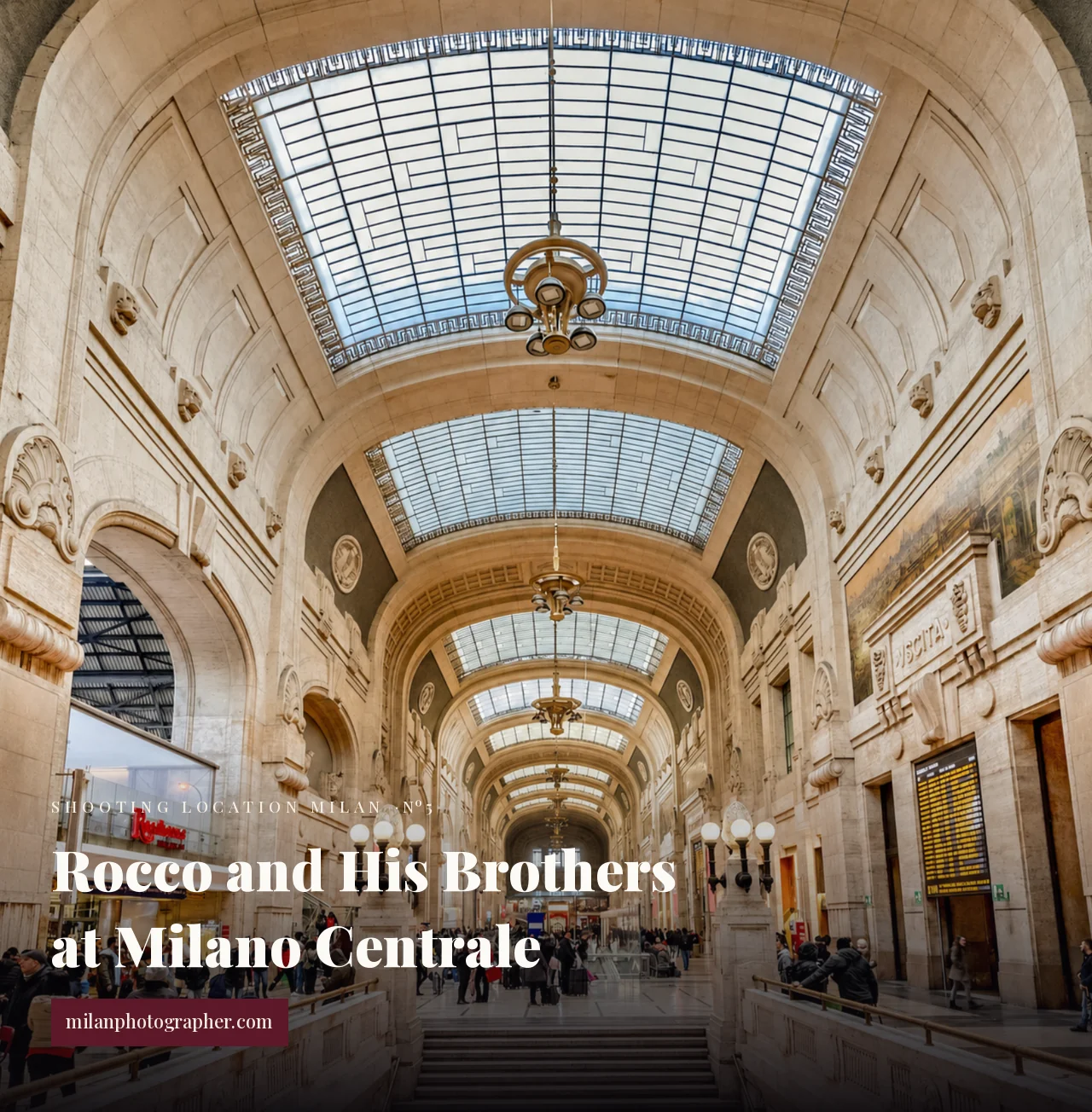
Photography idea: The exterior is often more practical than the platforms. Use the façade’s scale for a wide establishing portrait, then move under the arcades for closer frames. Early morning gives the square a cooler, quieter atmosphere; evening creates stronger urban energy.
Want your Milan arrival photographed like a story? This shooting location in Milan is ideal for travelers beginning or ending a journey. I can photograph the anticipation, movement and scale without making the result feel posed.
Shooting Location Milan 6: Rocco and Nadia on the Duomo Rooftop
Film: Rocco and His Brothers (Rocco e i suoi fratelli, 1960)
Director: Luchino Visconti
Shooting location Milan map point: Duomo di Milano Rooftops, Piazza del Duomo, 20122 Milano
High among the cathedral’s marble spires, Rocco faces Nadia and gives up the woman he loves. The setting should be romantic: two figures above the city, surrounded by Gothic beauty. Instead, Visconti turns the rooftop into an exposed emotional landscape. Nadia’s despair and the sharp forest of stone seem to belong to the same frame.
This is perhaps the most powerful location Milan offers to lovers of classic cinema. Alain Delon and Annie Girardot are framed beside sculptures and pinnacles that tourists can still approach today. The city below has changed profoundly, but the close relationship between the visitor and the carved marble remains recognizable.
The Duomo rooftops require a timed ticket, and access is controlled. Visitor density, security rules and restrictions on professional equipment must be considered. A private photoshoot should never be assumed to be included in ordinary admission. Piazza del Duomo below provides a flexible public alternative with the cathedral still dominating the background.
Photography idea: On the rooftop, simple clothing and restrained poses keep the marble from overwhelming the subject. In the square, dawn is the best opportunity for cleaner compositions; later in the day, crowds can become part of a lively Milan travel story.
Want to be photographed among Milan’s spires? I can plan a shooting location in Milan session around the Duomo, choosing the rooftop or surrounding public viewpoints according to permissions, light and crowd levels.
Shooting Location Milan 7: The International Outside Milano Centrale
Film: The International (2009)
Director: Tom Tykwer
Shooting location Milan map point: Piazza Duca d’Aosta, 20124 Milano
A political rally fills the square outside Milano Centrale. Umberto Calvini, an Italian candidate and arms manufacturer, steps into public view while investigators watch a conspiracy moving around him. The open plaza becomes a trap: ceremonial visibility gives an unseen assassin the opportunity to strike.
Tom Tykwer’s thriller moves through several global cities, and Milan is presented as part of a network of finance, politics and surveillance. Piazza Duca d’Aosta works because it combines a monumental railway façade with the harder lines of the business district. The scene feels public and controlled at the same time.
For a modern shooting location Milan route, this stop can be combined with Milano Centrale from Rocco and His Brothers. Stand in the square facing the station, then turn toward the Pirelli Tower. One location reveals two cinematic Milans: Visconti’s city of migration and Tykwer’s city of international power.
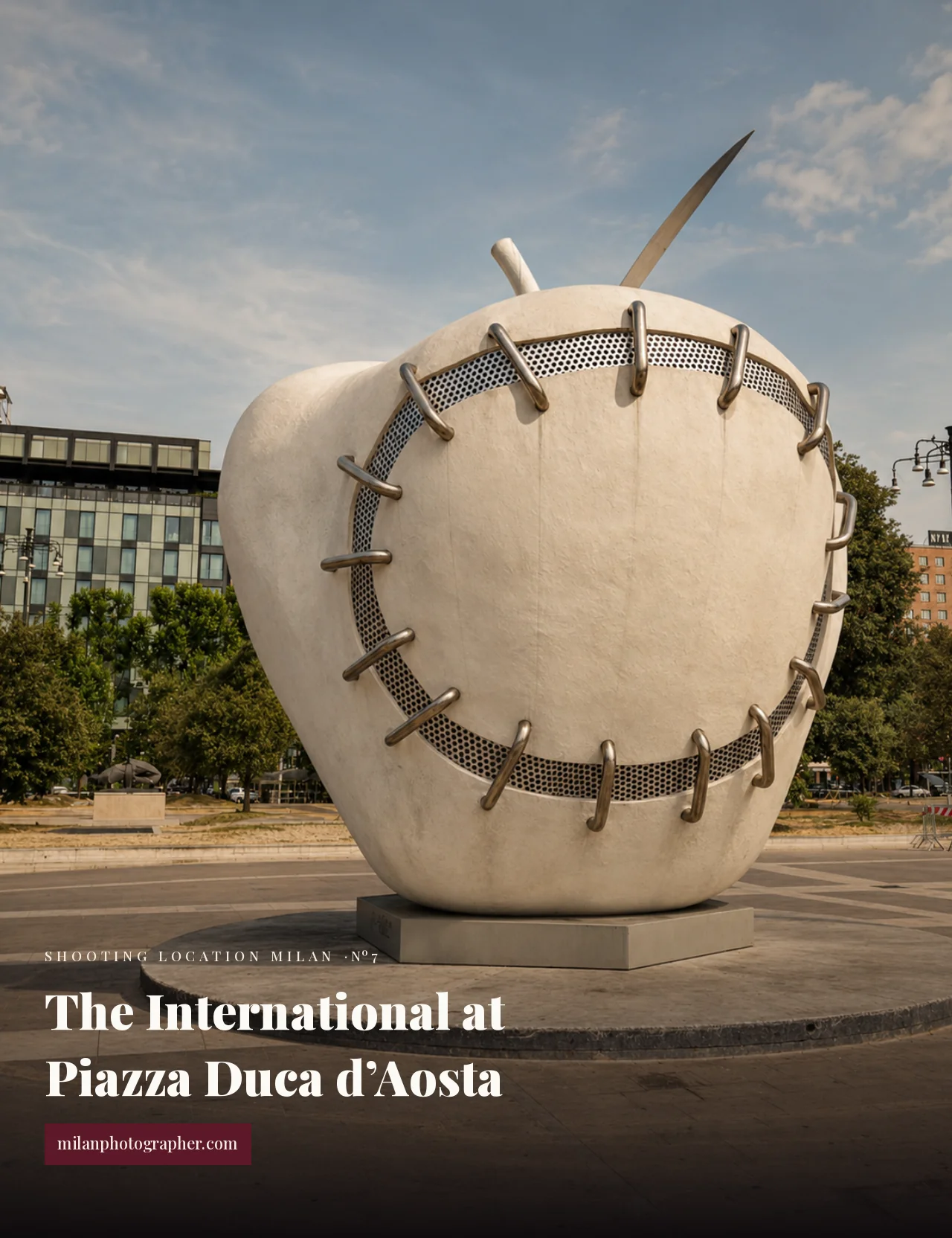
Photography idea: A longer lens can compress pedestrians, traffic and the station into a tense urban portrait. For a cleaner editorial result, use the geometric paving and broad façade early in the morning. Stay alert: it is a busy transport hub, not a controlled film set.
Want a sharper, modern Milan look? I can use this location for an editorial portrait with architecture, movement and a subtle thriller atmosphere.
Shooting Location Milan 8: La Notte and the Pirelli Tower
Film: La Notte (1961)
Director: Michelangelo Antonioni
Shooting location Milan map point: Pirelli Tower, Via Fabio Filzi 22, 20124 Milano
Before the central couple’s emotional distance is fully explained, Milan tells us how to read it. During the opening titles, the camera travels down the reflective façade of the Pirelli Tower. The city appears modern, abstract and strangely impersonal. Glass, height and mechanical movement replace the reassuring image of an old Italian city.
The sequence made the newly built skyscraper more than a landmark. It became a symbol of the economic boom and of the isolation Antonioni found inside modern life. The tower’s narrow, elegant profile still rises beside Milano Centrale, although the surrounding skyline is now far denser than it was in 1961.
This Milan landmark, best appreciated from the public streets, is primarily an exterior architecture stop. The tower contains offices and should not be treated as a freely accessible attraction. Good public viewpoints can be found from Piazza Duca d’Aosta and along Via Vittor Pisani; the exact visual effect changes with distance and weather.
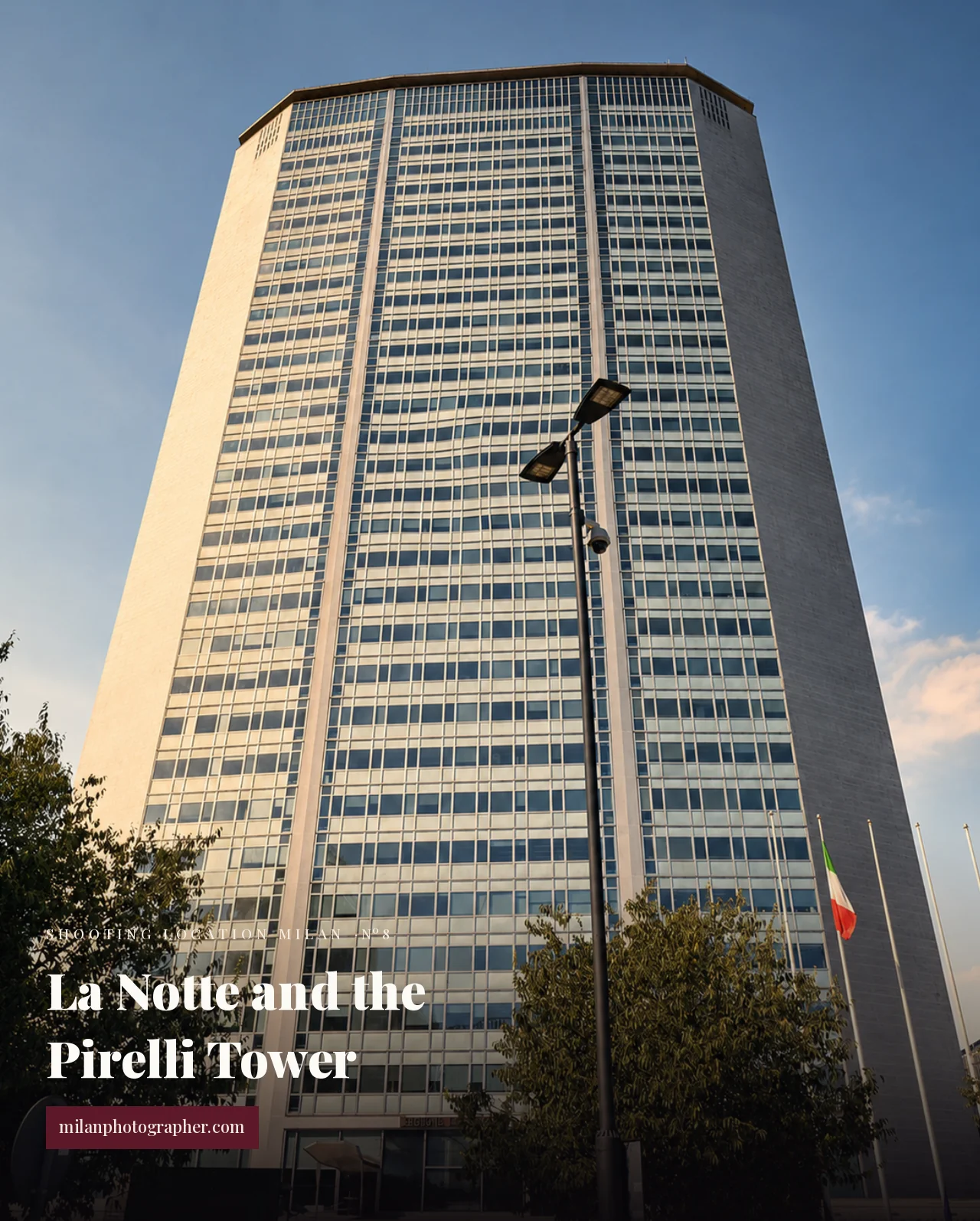
Photography idea: Reflections, negative space and a solitary figure suit the language of La Notte. Overcast weather is not a disadvantage here – it can make the glass and concrete feel more graphic. Black-and-white processing offers a respectful visual reference without copying Antonioni’s frames.
Want modern Milan rather than postcard Milan? This shooting location in Milan can anchor a minimalist portrait session using lines, reflections and the city’s postwar architecture.
Shooting Location Milan 9: Miracle in Milan at Piazza del Duomo
Film: Miracle in Milan (Miracolo a Milano, 1951)
Director: Vittorio De Sica
Shooting location Milan map point: Piazza del Duomo, 20122 Milano
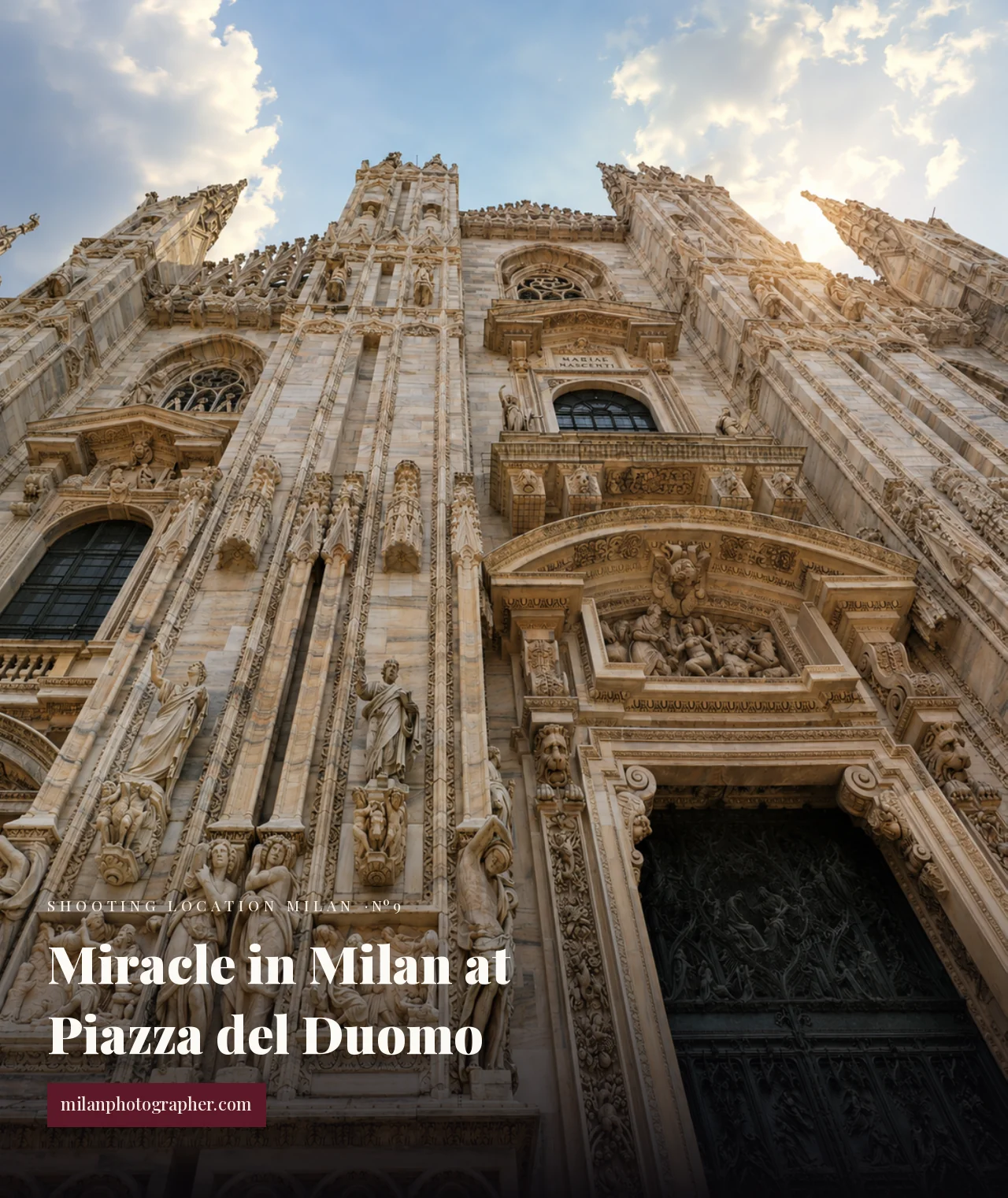
Police wagons carry the residents of a shantytown through Milan’s central square. Then realism gives way to wonder. The captives seize broomsticks from street sweepers and rise above the cathedral, flying toward a place where ordinary words of kindness truly mean what they say.
The finale is one of Italian cinema’s great transformations. De Sica takes people pushed to the edge of the postwar city and places them above its most recognizable monument. The Duomo is not merely a postcard backdrop: it becomes the threshold between hardship and impossible freedom.
For travelers following shooting location in Milan history, Piazza del Duomo is therefore connected to more than fashion and modern blockbusters. It carries the memory of a film that blended neorealism with fantasy and won the Grand Prix at Cannes. The square is open and easy to reach, though it is crowded through most of the day.
Photography idea: We do not need broomsticks or special effects to capture the scene’s freedom. A turning movement, wind in clothing or a low camera angle that opens the sky above the subject can create the same emotional lift. Dawn gives the architecture room to breathe.
Want your own Milan miracle? I can turn this Milan location into an expressive travel portrait – joyful, light and unmistakably connected to the city.
A Practical Route Through These Milan Filming Locations
You can see most central stops on foot. Begin at Milano Centrale and photograph the station façade, Piazza Duca d’Aosta and the Pirelli Tower. Take the metro or walk toward Porta Venezia for Villa Necchi Campiglio. Continue to the University of Milan on Via Festa del Perdono, then finish at Piazza del Duomo and the cathedral rooftops. Cimitero Monumentale is best treated as a separate northern stop.
This route shows why the phrase shooting location in Milan cannot be reduced to one visual style. Within a few kilometres, the city can represent aristocratic privacy, economic ambition, migration, romantic crisis, political danger and pure fantasy.
Turn a Famous Milan Film Location into Your Own Story
Visiting a movie location is satisfying because two versions of a place briefly overlap: the scene you remember and the real city moving around you. A personal photoshoot adds a third version – your experience of Milan at this moment.
My approach is not to reproduce actors’ costumes or copy a frame exactly. Instead, I identify what made the location cinematic: the scale of Centrale, the quiet geometry around Villa Necchi, the exposed emotion of the Duomo rooftop or the modern reflections near the Pirelli Tower. Then I adapt that visual language to you, your clothing, your relationship and the available light.
If you are choosing a shooting location in Milan for a proposal, honeymoon, anniversary, solo trip or editorial portrait, I can help select the place, time and route. Several locations can also be combined into one coherent walk, so the final gallery feels like a short film rather than a collection of unrelated tourist photographs.
Tell me which Milan movie you love – or simply what atmosphere you want. Together, we can turn a legendary Milan location into a scene that belongs to you.
Useful links
- Villa Necchi Campiglio (FAI): opening hours and tickets for the villa from I Am Love
- Duomo di Milano, official site: opening hours and tickets for the cathedral and the rooftop terraces
Planning a photoshoot in Milan?
Tell us when you’re in Milan. We reply within a day with free times, a route and the price. From €150, gallery within one week.